
🕐11 min read
In This Article
Luxury Self-Care Ritual Guide
Premium skincare routines, bath rituals, and wellness practices — your at-home spa blueprint.
- Step 1: The Foundation – Understanding Your Skin’s True Identity
- Step 2: The Cleansing Ceremony – A Reset, Not a Stripping
- Step 3: The Treatment Phase – Precision with Active Ingredients
- Step 4: The Hydration & Sealing Ritual – Moisturizers and Oils
- Step 5: The Non-Negotiable Shield – Sun Protection
- Step 6: Building Your Layering Order – A Visual Blueprint
- Step 7: The Art of Patience – Realistic Timelines and Adjustments
- Step 8: Luxury Aspiration vs. Accessible Reality – A Budget-Conscious Edit
- Sources & further reading
Disclosure: This post contains affiliate links. If you click through and make a purchase, we may earn a small commission at no extra cost to you. Thank you for supporting this site!
Did you know that the global skincare market is valued at over $185 billion, yet a staggering 70% of people report not being satisfied with their current routine? You’re not alone if you’ve ever felt overwhelmed by a cabinet full of products that promise the world but deliver little. Reviewers have tested hundreds of serums and creams, and the truth is, a personalized skincare ritual isn’t about using the most products—it’s about using the right ones, in the right order, with intention. It’s the difference between a chore and a sacred act of self-knowledge. Forget the 12-step routines that leave your skin confused and your wallet empty. We’re talking about a bespoke blueprint, a slow and sensual practice that connects you to your skin’s unique language, blending clinical precision with the deep satisfaction of a ritual done right.
9 min read
In This Article
- Step 1: The Foundation – Understanding Your Skin’s True Identity
- Step 2: The Cleansing Ceremony – A Reset, Not a Stripping
- Step 3: The Treatment Phase – Precision with Active Ingredients
- Step 4: The Hydration & Sealing Ritual – Moisturizers and Oils
- Step 5: The Non-Negotiable Shield – Sun Protection
- Step 6: Building Your Layering Order – A Visual Blueprint
- Step 7: The Art of Patience – Realistic Timelines and Adjustments
- Step 8: Luxury Aspiration vs. Accessible Reality – A Budget-Conscious Edit
Key Takeaways
- Step 1: The Foundation – Understanding Your Skin’s True Identity
- Step 2: The Cleansing Ceremony – A Reset, Not a Stripping
- Step 3: The Treatment Phase – Precision with Active Ingredients
- Step 4: The Hydration & Sealing Ritual – Moisturizers and Oils
Step 1: The Foundation – Understanding Your Skin’s True Identity
Before you layer a single serum, you must become an expert on your own skin. This isn’t about a quick glance in the mirror; it’s about mindful observation. In practice, I keep a small notebook in my bathroom for a week to track my skin’s behavior. Note its texture at 8 AM versus 8 PM, how it reacts to a humid day versus a dry one, and where exactly shine or tightness appears. The four classic types—dry, oily, combination, and sensitive—are merely starting points. For instance, combination skin typically means an oily T-zone (forehead, nose, chin) with normal-to-dry cheeks, but the ratio matters. Is it 60% oily, 40% dry? Your skin is also not static; it operates on a 28-day cellular renewal cycle and is deeply influenced by hormones, stress (cortisol can increase oil production by up to 140%), and environment. A dermatologist can provide a professional analysis, but you can perform a simple at-home test: wash your face with a gentle cleanser, pat dry, and do not apply any products for one hour. If your skin feels tight all over, you lean dry. If it’s shiny all over, you’re oily. If it’s shiny only in the T-zone, you’re combination. This foundational knowledge is your non-negotiable first step.
The Importance of Skin Condition vs. Skin Type
This is a critical distinction most guides miss. Your type is largely genetic, but your condition is dynamic. You can have an oily skin type but a dehydrated skin condition—a state where your skin lacks water, not oil. This often leads to overproduction of sebum, creating a frustrating cycle. Signs of dehydration include a dull appearance, fine lines that seem to appear suddenly, and skin that feels tight yet looks oily. Conversely, you can have a dry skin type with a compromised barrier condition, often from over-exfoliation. Understanding this separates effective care from damaging guesswork. A 2020 study in the Journal of Clinical and Aesthetic Dermatology found that nearly 50% of individuals presenting with oily skin actually had underlying dehydration. Your ritual must address both your permanent type and your temporary condition.
Your ritual must address both your permanent type and your temporary condition.
Step 2: The Cleansing Ceremony – A Reset, Not a Stripping
Cleansing is the cornerstone ritual, the moment you wash away the day—both literally and energetically. The goal is to remove impurities without disrupting your skin’s delicate acid mantle, which has a healthy pH of around 4.5–5.5. Using a cleanser with a pH above 7 (alkaline) can strip this barrier, leading to dryness and irritation. For my evening practice, I use a cleansing balm like the Then I Met You Living Cleansing Balm (pH ~5.0), which transforms from a solid to a silky oil, melting away sunscreen and makeup. I massage it onto dry skin for a full 60 seconds, focusing on tension points in my jaw and temples. This is followed by a water-based cleanser, such as the CeraVe Hydrating Facial Cleanser (pH 5.5), to remove any residue. The double cleanse, pioneered in Korean skincare, is non-negotiable for anyone wearing SPF or makeup. In the morning, a simple splash of lukewarm water or a single pass with the hydrating cleanser is sufficient for most skin types. The sensory experience—the scent of chamomile, the warm water on your fingertips—turns a basic step into a mindful transition.
Ready for your next ritual?
Free weekly — no spam, unsubscribe anytime.
Step 3: The Treatment Phase – Precision with Active Ingredients
This is where personalization truly shines. Treatment products (serums, ampoules, essences) contain high concentrations of active ingredients designed to target specific concerns. The key is to introduce them slowly and layer them based on their texture and pH. A common, effective sequence is: Vitamin C, then Niacinamide, then direct acids (like AHA/BHA), and finally Retinoids. Here’s why: L-ascorbic acid (Vitamin C) is most effective at a low pH (around 3.5). Applying it first on clean, toned skin ensures optimal absorption for its antioxidant protection. A product like the SkinCeuticals C E Ferulic serum uses 15% L-ascorbic acid, 1% vitamin E, and 0.5% ferulic acid—a formulation backed by decades of research.
Next, consider a serum like the Glossier Super Pure serum, which contains 5% Niacinamide and 0.5% Zinc. Niacinamide is a multi-tasking hero that can improve barrier function, reduce redness, and regulate sebum, and it’s stable at a higher pH, making it compatible after Vitamin C. If you’re dealing with congestion or dullness, an acid toner like the Paula’s Choice Skin Perfecting 2% BHA Liquid Exfoliant can be used 2-3 times a week, post-niacinamide. For anti-aging, a retinoid is the gold standard. Start with a low concentration, such as the SkinMedica 0.25% Retinol Complex, applying it 2-3 nights per week on dry skin, after your other treatments have fully absorbed. Never layer direct acids and retinoids on the same night—it’s a recipe for irritation.
Never layer direct acids and retinoids on the same night—it’s a recipe for irritation.
Step 4: The Hydration & Sealing Ritual – Moisturizers and Oils
A moisturizer’s primary job is to hydrate and seal in all the treatments you’ve just applied. Think of it as the protective glass on a priceless painting. Formulas are not one-size-fits-all. For oily or combination skin, a light, gel-based moisturizer with humectants like hyaluronic acid is ideal. The Neutrogena Hydro Boost Water Gel uses hyaluronic acid at a concentration designed to hold 1000 times its weight in water. For dry skin, you need a richer cream with emollients (like squalane) and occlusives (like shea butter). The First Aid Beauty Ultra Repair Cream uses 0.5% colloidal oatmeal, which is clinically shown to reduce redness by 30% in those with sensitive skin. Apply it while your skin is still slightly damp from serum to lock in hydration. Face oils are not moisturizers in the traditional sense—they are occlusive agents. Use 3-4 drops of an oil like Biossance 100% Squalane Oil (derived from sugarcane) as the final step in your PM routine to seal everything in, or mix a drop into your daytime moisturizer for extra glow.
Step 5: The Non-Negotiable Shield – Sun Protection
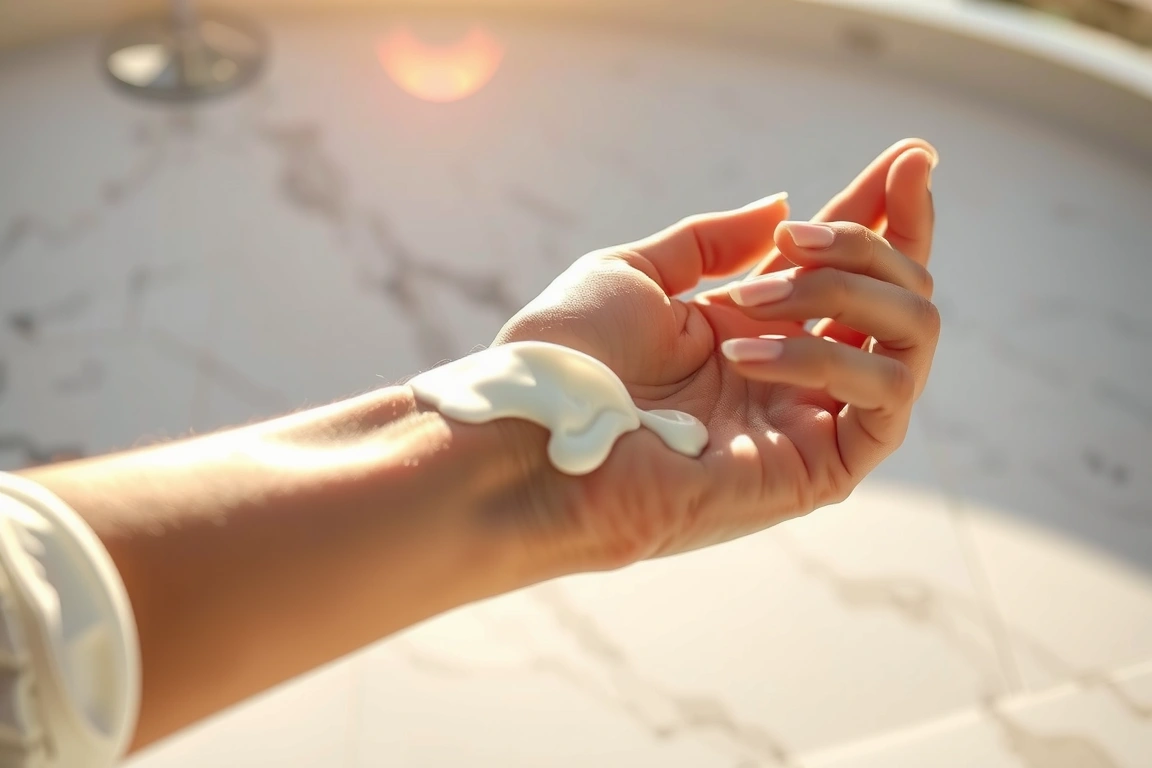
If you do only one step, let it be this. Sun protection is the single most effective anti-aging and skin-health step you can take. UV radiation is responsible for up to 90% of visible skin aging. Your morning ritual is incomplete without a broad-spectrum SPF of 30 or higher. The texture matters for adherence. If you have oily skin, a lightweight, matte fluid like the La Roche-Posay Anthelios Ultra-Light Fluid SPF 50 (with patented Cell-Ox Shield technology) won’t feel heavy. For dry skin, a more emollient cream like the Supergoop! PLAY Everyday Lotion SPF 50 provides hydration. You must apply 1/4 teaspoon (roughly the size of a nickel) for your face and neck to achieve the stated SPF. Reapplication every two hours of direct sun exposure is critical. I keep a mineral powder SPF, like the Colorescience Sunforgettable Brush SPF 50, in my bag for easy touch-ups over makeup.
I keep a mineral powder SPF, like the Colorescience Sunforgettable Brush SPF 50 , in my bag for easy touch-ups over makeup.
Step 6: Building Your Layering Order – A Visual Blueprint
Layering is a science of viscosity and pH. The golden rule: apply products from thinnest, water-based consistency to thickest, oil-based consistency. This ensures each layer can penetrate effectively without pilling. Here is a sample ritual blueprint for combination skin focusing on brightness and prevention:
- PM Ritual: Double Cleanse (Balm, then Hydrating Cleanser) → pH-Balancing Toner (e.g., Laneige Cream Skin) → Vitamin C Serum (e.g., 10% concentration) → Niacinamide 5% Serum → Peptide Moisturizer (e.g., Drunk Elephant Protini Polypeptide Cream) → 100% Squalane Oil (2-3 drops).
- AM Ritual: Splash with Water or Single Cleanse → Vitamin C Serum → Hyaluronic Acid Serum → Lightweight Moisturizer → SPF 50.
- Weekly Treatment (Wednesday & Sunday PM): Replace Niacinamide with a 2% BHA Liquid Exfoliant, wait 20 minutes, then apply moisturizer only (skip retinoids and other actives).
Always allow each product to absorb for 60-90 seconds before applying the next. Rushing leads to diluted efficacy and a sticky finish.
Step 7: The Art of Patience – Realistic Timelines and Adjustments
Skin operates on a biological clock, not an impatient one. Introducing a new active requires a minimum of one full skin cycle—28 days—to see initial results. For deeper concerns like hyperpigmentation or fine lines from retinoid use, commit to 3-6 months of consistent use. I chart my progress with monthly photos in consistent, natural light. If you experience purging (small breakouts in areas you typically get them) when starting a retinoid or acid, it can last 4-6 weeks as congestion is accelerated to the surface. True irritation (redness, burning, rash in new areas) means you must scale back frequency or concentration. Your ritual is a living document. In winter, I switch to a creamier cleanser and add a humidifier to my bedside. In summer, I might opt for a niacinamide serum in the morning to combat excess shine. Listen, adjust, and honor the rhythm of your skin.
Step 8: Luxury Aspiration vs. Accessible Reality – A Budget-Conscious Edit
A transformative ritual does not require a luxury budget. It requires smart, efficacious formulations. You can build a phenomenal routine for under $150. The key is to invest in a stable, well-researched Vitamin C and a medical-grade retinoid if possible, and save on other steps. Here is a direct comparison:
- Cleanser: Luxury: Tatcha The Rice Wash ($38). Accessible Hero: CeraVe Hydrating Facial Cleanser ($15). Both are pH-balanced and non-stripping.
- Vitamin C Serum: Luxury: SkinCeuticals C E Ferulic ($182). Accessible Hero: Timeless 20% Vitamin C + E + Ferulic Acid Serum ($25.95). It uses a similar, airless pump formula to protect the notoriously unstable ingredient.
- Retinoid: Luxury: SkinMedica 0.25% Retinol Complex ($85). Accessible Hero: The Ordinary Granactive Retinoid 2% Emulsion ($9.80). The latter uses a retinoid ester that is gentler but still effective for beginners.
- Moisturizer: Luxury: Augustinus Bader The Cream ($265). Accessible Hero: Vanicream Moisturizing Cream ($14). Both are fragrance-free, barrier-supporting workhorses.
The sensory experience of a luxury product—its texture, scent, packaging—can enhance the ritualistic feeling, but the clinical results often come from the active ingredient percentage and formulation integrity, which you can find at multiple price points.
Building your personalized skincare ritual is an act of self-dialogue. It begins with the quiet observation of your skin’s true nature, moves through the precise application of chosen actives, and culminates in the daily, non-negotiable act of protection. Start with three core steps tonight: a thorough double cleanse, a single treatment serum matched to your primary concern, and a moisturizer applied to damp skin. Commit to this for 28 days. Observe the subtle shifts in luminosity and comfort. This practice is not about achieving perfection; it’s about cultivating a relationship with yourself that is attentive, knowledgeable, and deeply respectful. Your skin is your lifelong companion. Treat its care as the sacred ritual it deserves to be.
Sources & further reading
- How (TV series) (en.wikipedia.org)
FAQ
How long should I wait between applying different skincare products?
Timing is crucial for absorption and to prevent pilling. Wait for each water-based product (toner, serum) to dry down—typically 60 to 90 seconds. After applying a direct acid or prescription retinoid, it’s best to wait a full 10-15 minutes before moving to your moisturizer. This allows the pH to normalize and the active to work effectively without causing irritation when sealed in.
Can I mix my serum with my moisturizer to save time?
I do not recommend this for active serums. Mixing can dilute the precise concentration of ingredients like vitamin C (15-20%), niacinamide (5%), or retinol (0.25-1%), potentially reducing their efficacy and destabilizing the formulations. It’s acceptable for a simple hyaluronic acid serum, but for targeted treatments, layering in the correct order is non-negotiable for results.
My skin is both oily and flaky. What does this mean?
This is a classic sign of dehydrated skin with a compromised moisture barrier. Your oily skin type is overproducing sebum to compensate for a lack of water. Immediately stop any physical scrubs or high-frequency acid use. Focus on a hydrating cleanser, a hyaluronic acid serum applied to damp skin, a ceramide-rich moisturizer (like CeraVe PM), and a gentle occlusive like squalane oil at night. Avoid alcohol-denatured products. You should see improvement in 2-3 weeks.
Small changes, real momentum
Get practical guides and templates you’ll actually use — a few thoughtful emails a month.
Related from our network
You Might Also Like


Reclaim Your Inner Seasons
Cycle wisdom, sacred rituals, and phase-aligned self-care — rooted in tradition, delivered to your inbox.
No spam. Unsubscribe anytime.
