
🕐8 min read
In This Article
Luxury Self-Care Ritual Guide
Premium skincare routines, bath rituals, and wellness practices — your at-home spa blueprint.
The average woman spends roughly forty-seven minutes on her evening routine, according to a 2023 survey by the American Academy of Sleep Medicine, yet most of that time is spent rushing through steps with the same cortisol-spiking energy she used to power through her workday. But here is what the research on circadian rhythms and autonomic nervous system regulation reveals: the way you transition from day to night directly impacts your sleep architecture, your skin’s overnight repair capacity, and your body’s ability to downregulate the sympathetic nervous system. A study published in the Journal of Clinical Endocrinology & Metabolism found that elevated cortisol levels in the evening are associated with poorer sleep quality and increased oxidative stress on skin cells. This is not about adding more products to your shelf. It is about reorienting your relationship with the hours between dusk and dawn. The evening ritual, when approached as a sacred sequence rather than a checklist, becomes the most potent form of self-care you can practice. It is the moment you stop performing for the world and begin returning to yourself. And it begins not with a cleanser, but with a decision to slow down enough to feel the water on your skin.
The Prelude: Curating Your Sensory Environment
Before a single drop of oil touches your face, the space around you must be prepared. Light is the most immediate signal your brain receives about whether it is time to be alert or to rest. Exposure to blue light wavelengths in the 460–480 nanometer range suppresses melatonin production by up to 50 percent, according to research from Harvard Medical School. Begin by dimming your overhead lights thirty to sixty minutes before your ritual. If you use smart bulbs, set them to a warm 2200–2400 Kelvin temperature — the color of candlelight. The Philips Hue White Ambiance bulbs (approximately $50 for a three-pack) allow you to program this shift automatically, so you do not have to think about it.
Scent follows light as the second anchor. The olfactory system has a direct pathway to the limbic brain, bypassing the thalamus, which means fragrance can immediately alter your emotional state without cognitive mediation. I recommend Diptyque’s Feu de Bois Candles ($72) for its smoky, grounding note of birch bark, or Byredo’s Bibliothèque ($70) if you prefer a warmer, leather-and-vanilla accord. For a more accessible option, the P.F. Candle Co. Teakwood and Tobacco ($24) offers a similarly enveloping scent profile. Light your candle at the start of your ritual and let it burn through the entire sequence — the consistent scent acts as a sensory anchor, training your brain to associate that fragrance with relaxation over time.
Temperature is the third and most overlooked element. The optimal sleep environment hovers between 65 and 68 degrees Fahrenheit (18–20 degrees Celsius). Your body’s core temperature naturally drops by about one degree Fahrenheit to initiate sleep, and a cool room facilitates this process. If your bedroom runs warm, consider a ChiliSleep Cube sleep system (starting at $499) or a simpler solution: a cooling gel pillow topper ($35–$60) and lightweight linen sheets. The combination of dim light, a consistent scent, and a cool environment tells your body, with unmistakable clarity, that the day is over.
The First Unwinding: Double Cleansing with Intention
Double cleansing is not a trend; it is a technique rooted in the physiology of the skin barrier. Your first cleanse removes oil-based impurities — sunscreen, sebum, and environmental pollutants — while the second cleanse addresses water-based debris like sweat and dust. Each step should take a full sixty seconds, not the fifteen-second swipe most of us default to. The mechanical action of massage stimulates lymphatic drainage and increases blood flow to the skin’s surface, which primes the tissue for better absorption of subsequent products.
For the first cleanse, choose an oil-based or balm formula. Tata Harper’s Nourishing Oil Cleanser ($72) is a splurge that delivers on both performance and sensory experience — it contains 98 percent naturally derived ingredients, including jojoba oil and evening primrose, and emulsifies into a milky texture that rinses clean without residue. If your budget leans more practical, the DHC Deep Cleansing Oil ($28 for 6.7 ounces) has been a cult favorite since 1980 for good reason: its olive oil and vitamin E base dissolves even water-resistant sunscreen without stripping the barrier. Apply two to three pumps to dry skin, then massage in slow, upward circles for a full sixty seconds. Pay particular attention to the jawline and the sides of the nose, where sebum and product tend to accumulate.
For the second cleanse, reach for a water-based formula that complements your skin type. If your barrier is compromised or you are using active ingredients like retinol or exfoliating acids, a cream or milk cleanser is preferable to a foaming one. La Mer’s The Cleansing Foam ($95) is undeniably luxurious — it uses the brand’s signature Miracle Broth and creates a dense, cushiony lather — but the CeraVe Hydrating Cream-to-Foam Cleanser ($16) performs nearly as well for a fraction of the price. It contains ceramides 1, 3, and 6-II to support barrier repair, plus niacinamide at approximately 2 percent to calm inflammation. Apply a dime-sized amount, massage for another sixty seconds, and rinse with lukewarm water — never hot, as heat degrades the lipid barrier. Pat dry with a soft cotton or bamboo cloth; do not rub.
The Facial Symphony: Essences, Serums, and Moisturizers
The sequence in which you apply your facial products is not arbitrary. The molecular weight of each formulation dictates how deeply it penetrates, and applying them in the wrong order can render expensive ingredients ineffective. The general rule is thinnest to thickest, but within that framework there is a more specific logic: essence first, then treatment serum, then eye cream, then moisturizer, then face oil. Each layer should be allowed to absorb for thirty to sixty seconds before the next is applied. Rushing this step is the single most common mistake in any skincare ritual.
An essence is not a toner. It is a hydrating first step that lowers the skin’s pH after cleansing and prepares the surface for subsequent actives. SK-II’s Facial Treatment Essence ($99 for 2.5 ounces) contains 90 percent Pitera, a ferment filtrate rich in amino acids, vitamins, and minerals that supports natural cell turnover. If the price point gives you pause, Missha’s Time Revolution The First Treatment Essence 5X ($49) uses a similar fermentation process and delivers comparable hydration. Apply three to four drops to clean palms and press gently into the skin — do not swipe with a cotton pad, as that wastes product and adds unnecessary friction.
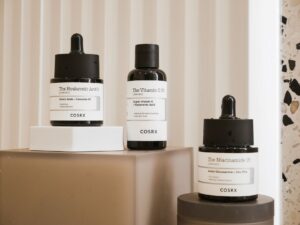
Your treatment serum should address your primary concern. For anti-aging, I recommend a retinoid at a concentration between 0.3 percent and 0.5 percent. SkinCeuticals Retinol 0.3 ($62) is a well-formulated option that uses a stabilized delivery system to minimize irritation. For pigmentation or uneven texture, consider a niacinamide serum at 5 percent concentration — The Ordinary Niacinamide 10% + Zinc 1% ($6) is effective, though I find it can pill under heavier creams; Paula’s Choice 10% Niacinamide Booster ($44) has a silkier texture that layers more gracefully. Apply three drops to your face and neck, avoiding the immediate eye area. Follow with your moisturizer while the skin is still slightly damp — this traps hydration and improves product absorption. Dr. Barbara Sturm’s Face Cream ($270) is the gold standard for barrier support, but Kiehl’s Ultra Facial Cream ($38 for 1.7 ounces) uses squalane and glacial glycoprotein to achieve a similar effect at a fraction of the cost. Finish with two to three drops of a face oil like Augustinus Bader’s The Face Oil ($185) or, for a more accessible option, The Ordinary 100% Organic Cold-Pressed Rose Hip Seed Oil ($10). Oil seals in the previous layers and provides occlusive protection throughout the night.
The Body Ritual: Dry Brushing and Intentional Application
The skin on your body is thicker and less prone to breakouts than facial skin, but it still benefits from dedicated attention. Dry brushing is a practice with roots in Ayurvedic medicine, and modern research supports its benefits: a 2020 study in the Journal of Cosmetic Dermatology found that regular dry brushing improved skin firmness and reduced the appearance of cellulite by stimulating microcirculation. The key is technique, not pressure. Using a brush with natural bristles — the Goop G.Tox Ultimate Dry Brush ($38) has the right balance of firmness and flexibility — begin at your feet and brush in long, upward strokes toward the heart. This direction supports lymphatic drainage, whereas random or downward strokes can disrupt fluid flow.
Spend three to five minutes total on the full body, focusing longer on areas with thicker skin like the outer thighs and elbows. Avoid the face, the chest, and any areas with broken skin or active eczema. Dry brush before your shower, not after, so that the loosened dead skin cells are rinsed away. After showering, while your skin is still damp, apply a body oil or lotion within three minutes to lock in moisture. Tata Harper’s Revitalizing Body Oil ($110 for 3.4 ounces) is a sensory masterpiece — it contains 19 active botanicals including rosemary, grapefruit, and arnica, and absorbs in under a minute without leaving a greasy film. For a more budget-conscious choice, Nécessaire’s The Body Oil ($35 for 3.4 ounces) uses a blend of marula, meadowfoam, and cacay oils rich in vitamin E and linoleic acid. Apply two to three pumps per major body area — arms, torso, legs — and massage in upward strokes, mirroring the direction of your dry brushing.
Do not neglect your hands and feet during this step. The skin on the palms and soles lacks sebaceous glands, meaning it cannot produce its own oil and is prone to cracking and dryness. After applying body oil, massage any remaining product into your hands and feet, paying special attention to the cuticles and the heels. This small act of attention prevents the roughness that can catch on silk sheets and disrupt the sensory pleasure of climbing into bed.
The Hair Offering: Oiling, Brushing, and Protective Rituals
Your hair and scalp deserve the same ritualistic care as your face. The scalp is an extension of the facial skin — it has a similar microbiome and is subject to the same oxidative stress from pollution and UV exposure. A pre-bed scalp oiling routine not only nourishes the hair follicles but also signals to your nervous system that you are entering a state of care. The Innate Life’s Scalp Oil ($48 for 1.7 ounces) is my first choice: it contains rosemary, lavender, and cedarwood essential oils in a jojoba and grapeseed base, and a 2022 study in Phytotherapy Research confirmed that rosemary oil is as effective as 2 percent minoxidil
Related from our network
- How to Moon Bath Ritual How To: Step-by-Step Guide (moonrituallibrary)
- THE LUXURY BEAUTY ROUTINE Skincare, Haircare, Fragrance… (familyflourish)
- THE LUXURY BEAUTY ROUTINE Skincare, Haircare, Fragrance… (bookmoodmatch)
You Might Also Like


Reclaim Your Inner Seasons
Cycle wisdom, sacred rituals, and phase-aligned self-care — rooted in tradition, delivered to your inbox.
No spam. Unsubscribe anytime.
