
🕐4 min read
Luxury Self-Care Ritual Guide
Premium skincare routines, bath rituals, and wellness practices — your at-home spa blueprint.
The deep, tender bump that announces itself three days before your period is not a punishment for the chocolate you ate or the moisturizer you chose. It is a conversation between your ovaries and your sebaceous glands—mediated by androgen receptors that respond to the natural ebb and flow of progesterone and estrogen. Hormonal acne typically clusters along the jawline, chin, and lower cheeks, and it resists the quick fixes that work for surface-level breakouts because its root cause is internal: a sensitivity to normal hormonal fluctuations that triggers excess sebum production, follicular hyperkeratinization, and inflammation. The conventional response is spironolactone or oral contraceptives, but for those seeking alternatives that work with the body rather than overriding its signals, luxury skincare offers a different path. The six solutions that follow target the four mechanisms of hormonal acne—sebum output, clogged pores, bacterial activity, and inflammation—using ingredients at clinically meaningful concentrations. Each one is a ritual in its own right, requiring patience, precision, and the understanding that skin healing unfolds in cycles, not overnight.
Niacinamide 5%: The Sebum Regulator That Respects Your Barrier
Niacinamide is not a trendy newcomer; it is a form of vitamin B3 that has been studied for decades, and its effects on sebum production are both measurable and meaningful. A 2015 study published in the Journal of Cosmetic Dermatology found that a 4% niacinamide formulation reduced sebum excretion rates by 24% over eight weeks, and subsequent research with 5% concentrations has shown reductions closer to 30% in participants with oily, acne-prone skin. The mechanism is elegant: niacinamide inhibits the transfer of lipid droplets from the sebaceous gland to the skin surface without suppressing the gland itself, which means your skin continues to produce its natural moisturizing factors but in a balanced, non-congesting amount.
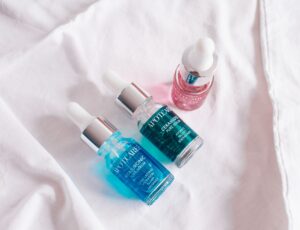
The texture of a well-formulated 5% niacinamide serum is something between water and a thin emulsion—barely there, quick to absorb, leaving behind a slight velvetiness that makes it an ideal first layer after cleansing. Paula’s Choice 10% Niacinamide Booster ($44 for 20 ml) is actually designed to be mixed into your moisturizer at a few drops per application, which allows you to customize the concentration. The Ordinary Niacinamide 10% + Zinc 1% ($6.50 for 30 ml) is a more potent option, but I find the 10% concentration can cause a transient stinging sensation in those with compromised barriers, which is common in hormonal acne when you have been using benzoyl peroxide or salicylic acid. The sweet spot is 5%, and you can achieve it by mixing the Paula’s Choice Booster at a 1:1 ratio with your moisturizer or by using a dedicated 5% formula like the one from Naturium ($20 for 50 ml). Layer it after your toner and before any treatment serums, using three drops pressed into damp skin. The scent is barely mineral, almost imperceptible—the mark of a formula that prioritizes efficacy over fragrance.
What most articles skip is the timeline: niacinamide does not work overnight. You will notice a reduction in oiliness around week three, but the real change—fewer deep, inflamed bumps—takes six to eight weeks of consistent twice-daily application. This is not a quick fix; it is a recalibration of your skin’s baseline. And because niacinamide also supports ceramide production, it prevents the rebound oiliness that occurs when you strip the barrier with harsher treatments. It is the foundation upon which everything else is built.
Retinol 0.3%: The Cellular Turnover Specialist
If niacinamide is the diplomat, retinol is the architect. It works by binding to retinoic acid receptors in the nucleus of skin cells, signaling them to accelerate their lifecycle and shed more efficiently. For hormonal acne, this is critical: the condition is characterized by follicular hyperkeratinization, meaning the cells lining the pore do not shed properly, creating a plug that traps sebum and bacteria. Retinol at 0.3% is the ideal entry-to-moderate strength for this purpose—strong enough to normalize desquamation within four to six weeks, but gentle enough to be integrated into a ritual without causing the peeling and purging that higher concentrations (0.5% and above) often trigger.
SkinCeuticals Retinol 0.3% ($64 for 30 ml) is the gold standard here, formulated with a delivery system that releases the active gradually over eight hours, minimizing irritation while maximizing efficacy. The texture is a silky, amber-tinted cream that absorbs fully into the skin, leaving no residue. Medik8 Crystals Retinal 3 ($50 for 30 ml) uses a stabilized form of retinaldehyde, which converts to retinoic acid in a single step (versus retinol’s two-step conversion), making it slightly more potent at the same percentage. Both options are excellent, and the choice comes down to whether you prefer the gradual release of SkinCeuticals or the faster conversion of Medik8.
The ritual matters here more than the product. Retinol must be applied to completely dry skin—wait at least twenty minutes after cleansing—because water increases penetration and, with it, the risk of irritation. Start with two non-consecutive nights per week for the first two weeks, then increase to three nights for weeks three and four, and finally to four or five nights if your skin tolerates it. Use a pea-sized amount for the entire face, avoiding the eye area and the corners of the nose. The scent of retinol is faintly metallic, almost medicinal, which I have come to associate with the quiet work of renewal happening beneath the surface. Do not layer it with other active ingredients on the same night; let it be the sole treatment, followed by a rich moisturizer that contains ceramides or shea butter to support the barrier through the turnover process.
Azelaic Acid 10%: The Inflammation and Pigmentation Solution
Hormonal acne leaves behind evidence long after the bump itself has flattened. The red and brown marks—post-inflammatory hyperpigmentation and erythema—can persist for months, and they are often more noticeable than the original breakout. Azelaic acid addresses both the active inflammation and the aftermath, making it uniquely suited to the hormonal acne cycle. It works by inhibiting
Related from our network
- Expert Roundup: 7 Advanced Home Automation Scenarios with 5 Device Integrations (smarthomewizards)
- Spring Home Automation Refresh: 5 Smart Upgrades for Seasonal Allergies (theconnectedhaven)
- Break Bad Habits Faster: Syncing Your Detox Plan to Waning Moon Cycles (moonrituallibrary)
You Might Also Like

Reclaim Your Inner Seasons
Cycle wisdom, sacred rituals, and phase-aligned self-care — rooted in tradition, delivered to your inbox.
No spam. Unsubscribe anytime.
